Human Nature in an Age of Biotechnology
Philosophie, Tamar Sharon
Tamar Sharon Human Nature in an Age of Biotechnology texte pdf - Un grand auteur, Tamar Sharon a écrit une belle Human Nature in an Age of Biotechnology livre. Ne vous inquiétez pas, le sujet de Human Nature in an Age of Biotechnology est très intéressant à lire page par page. Le livre a pages 188. Je suis sûr que vous ne vous sentirez pas ennuyeux à lire. Ce livre étonnant est publié par une grande fabrication, Tamar Sharon. La lecture de la Human Nature in an Age of Biotechnology fera plus de plaisir dans votre vie. Vous pourrez profiter de l'idée derrière le contenu. Télécharger Human Nature in an Age of Biotechnology bientôt à votre ordinateur portable facilement.. Si vous avez décidé de trouver ou lire ce livre, ci-dessous sont des informations sur le détail de Human Nature in an Age of Biotechnology pour votre référence.
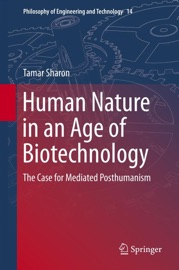
de Tamar Sharon
4.1 étoiles sur 5 (749 Commentaires client)
Nom de fichier : human-nature-in-an-age-of-biotechnology.pdf
La taille du fichier : 22.98 MB
The volume offers a comprehensive mapping of posthumanist discourse divided into four broad approaches—two humanist-based approaches: dystopic and liberal posthumanism, and two non-humanist approaches: radical and methodological posthumanism. The author compares and contrasts these models via an exploration of key issues, from human enhancement, to eugenics, to new configurations of biopower, questioning what role technology plays in defining the boundaries of the human, the subject and nature for each.
Building on the contributions and limitations of radical and methodological posthumanism, the author develops a novel perspective, mediated posthumanism, that brings together insights in the philosophy of technology, the sociology of biomedicine, and Michel Foucault’s work on ethical subject constitution. In this framework, technology is neither a neutral tool nor a force that alienates humanity from itself, but something that is always already part of the experience of being human, and subjectivity is viewed as an emergent property that is constantly being shaped and transformed by its engagements with biotechnologies. Mediated posthumanism becomes a tool for identifying novel ethical modes of human experience that are richer and more multifaceted than current posthumanist perspectives allow for.
The book will be essential reading for students and scholars working on ethics and technology, philosophy of technology, poststructuralism, technology and the body, and medical ethics.

No comments:
Post a Comment